Reflections: The Super Bowl Halftime Show
This year opened on a dark and heavy note, marked by increased ICE presence in many of our communities and a series of tragic killings in Minneapolis. In moments like these, cultural events and music remind us of our shared humanity amid grief and uncertainty. Seeing Bad Bunny win at the Grammys one week and headline one of the most watched Super Bowl halftime shows in history the next felt worth pausing to reflect on.
Leading up to the big day, it was powerful to witness the outpouring of love across backgrounds. People were learning Spanish, practicing salsa and singing “Debí Tirar Más Fotos,” the title track of his album. That kind of cultural embrace matters. Especially at a moment when immigrants like me can feel our place in this country being questioned.
The show opened with vendors, bright colors and small businesses proudly showcasing their crafts and trades. It felt like a vivid tribute to the hustle and determination of the generations who carved out a place in this country. But Hispanic and Latin American immigrants are often reduced to their labor or their work ethic — when in truth, our worth stretches far beyond that. It’s in our loyalty, our compassion and our ability to celebrate and dance even in the face of political turmoil that have uprooted our countries and pushed so many of us to begin again elsewhere. The halftime show displayed this resilience.
What stood out most was that he did not water himself down. Benito did not present a polished, overly commercial version of himself. The performance, while family friendly, still carried the grit and fervor of Latin culture. ‘Perreo’ is not just a dance that Latin moms everywhere side-eye; it is rooted in Caribbean and Afro-Caribbean traditions that have evolved over time. The show was a reminder that we can live our “Latinidad” out loud and still be respected.
“Lo Que Le Pasó a Hawáii” which translates to “What Happened to Hawaii,” is a song about gentrification and the island’s ongoing struggle to preserve its identity. In the song, performed by trailblazer and openly gay Hispanic artist Ricky Martin, Benito’s line ‘no suelten la bandera’ meaning ‘don’t drop the flag’ references to the Puerto Rican flag being banned from 1948 to 1957. This law made it illegal to own, display or sing songs related to the flag, independence movement or speak against the US government. A powerful parallel.
During the performance, Bunny stood on power lines as the lights went out, referencing “El Apagón,” a song that calls attention to Puerto Rico’s unstable power grid and recurring blackouts and ongoing infrastructure challenges. These were not random visuals. They were a reflection of Puerto Rican’s lived experience on the island.
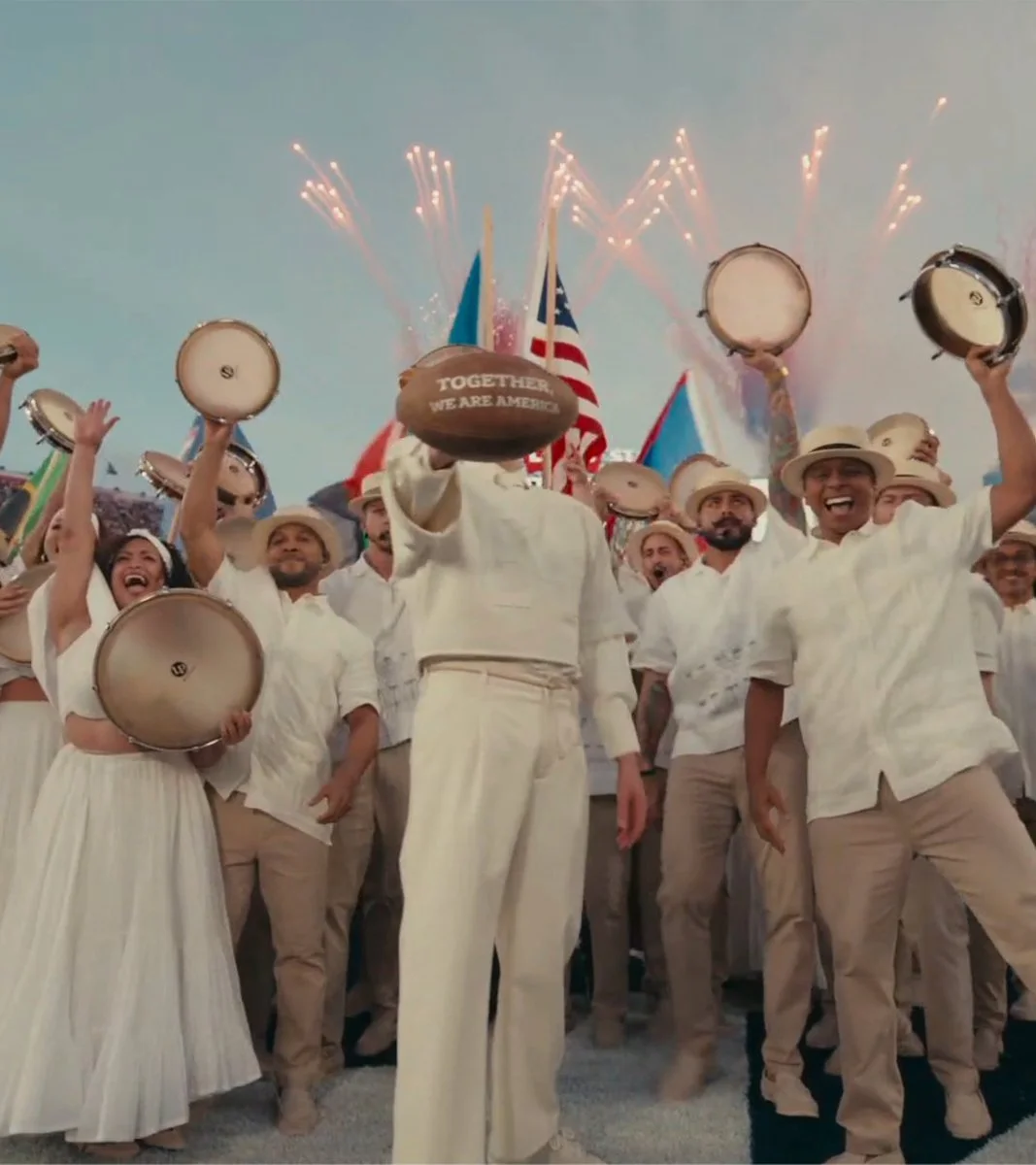
The closing image of a football reading “Together We Are America” served as more than a slogan. It was a geographic reminder that America extends beyond the United States. A gesture of inclusion, challenging narrow views of who belongs and who is ‘American’. All countries in the American continent were listed and so many of us felt represented, from Argentina all the way to Canada. That is what inclusion feels like.